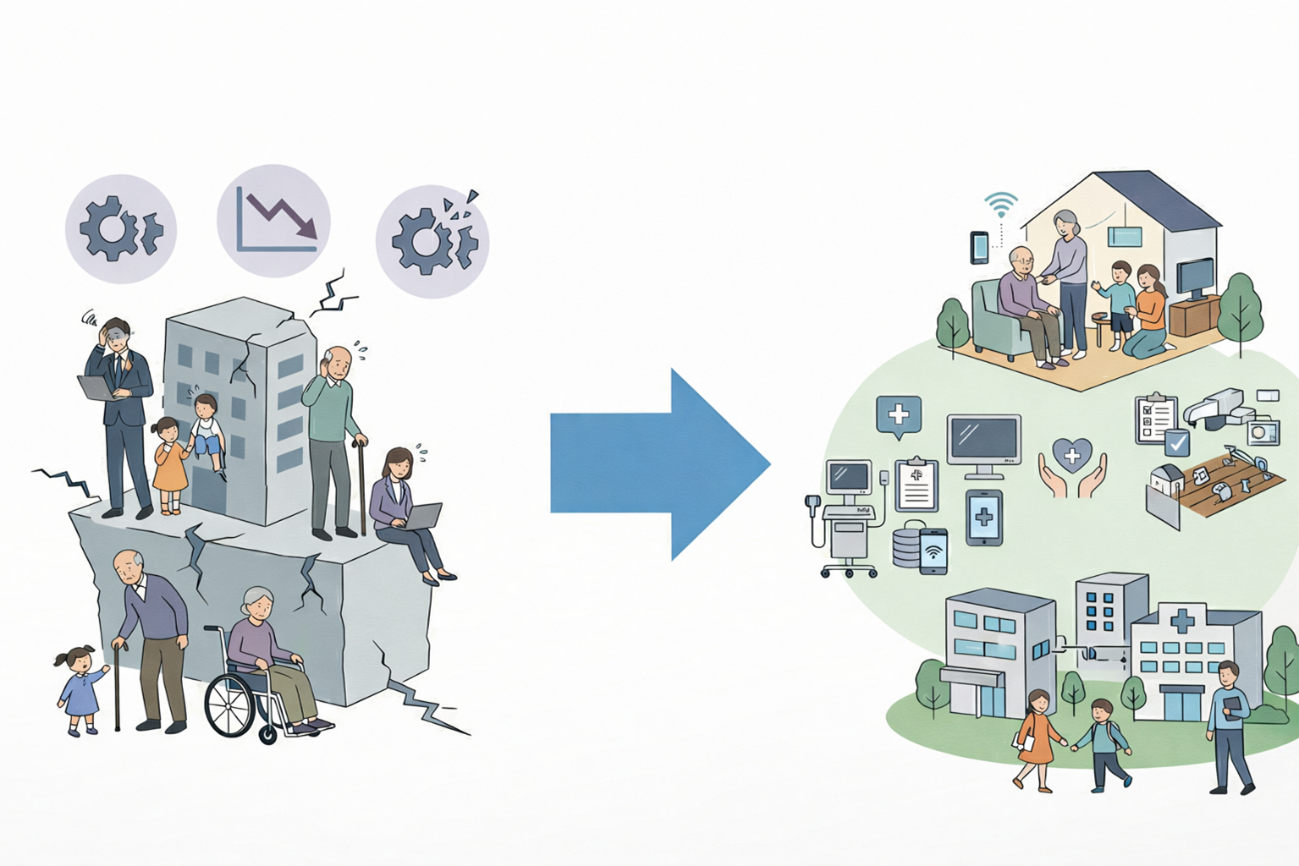
In 2025, the number of births in Japan fell to 705,809, marking a new record low and representing a 2.1% decrease from the previous year. The pace of population decline is progressing 17 years faster than previously projected by the government, significantly undermining the demographic structure that Japanese society had long assumed. Beyond the rapid reduction in the working-age population, this trend is expected to have widespread and serious consequences, including the potential collapse of regional medical and long-term care facilities and growing pressure on the sustainability of the social security system as a whole.
From NPMI’s perspective, declining birthrates should not be viewed merely as a decrease in the number of births but as a fundamental structural transformation of the social system. When considering the future shortage of healthcare and long-term care workers, defensive cost-cutting measures that simply aim to preserve existing frameworks will be insufficient. Instead, it is essential to assume a changing population structure and promote a transition toward home-based care models while making long-term investments in businesses that can dramatically improve productivity in frontline care settings.
As a specialized fund, NPMI aims to contribute to the redesign of a sustainable social system by providing long-term risk capital and management support to businesses that rebuild and strengthen existing regional healthcare and care infrastructure.
References
- Nikkei, “Japan’s Births Hit Record Low of 705,000 Last Year,” February 26, 2026.
(https://www.nikkei.com/article/DGXZQODL263FL0W6A220C2000000/)
【Key Term Explanation:Total Fertility Rate】
The total fertility rate (TFR) is an indicator that represents the average number of children a woman is expected to give birth to over her lifetime between the ages of 15 and 49. It is calculated by summing the age-specific fertility rates for a given year and is considered one of the most important indicators for forecasting long-term population trends.
In general, a fertility rate of approximately 2.07 is considered necessary to maintain a stable population over the long term. However, Japan’s total fertility rate has remained well below this level for many years. The sharp decline in births observed in 2025 occurred earlier than previously anticipated and reflects a combination of factors, including rising rates of unmarried individuals, delayed marriage, and growing economic uncertainty about the future.
A continued decline in this indicator does not only imply severe labor shortages in the future; it also threatens the very foundation of social security systems such as pensions, healthcare, and long-term care. For funds specializing in the healthcare and long-term care sectors, trends in the total fertility rate serve as a critical baseline for evaluating long-term service demand and the difficulty of securing specialized human resources. As such, the trajectory of the total fertility rate is a key factor in shaping long-term investment strategies and support policies.
References
- Nikkei, “Japan’s Births Hit Record Low of 705,000 Last Year,” February 26, 2026.
(https://www.nikkei.com/article/DGXZQODL263FL0W6A220C2000000/)