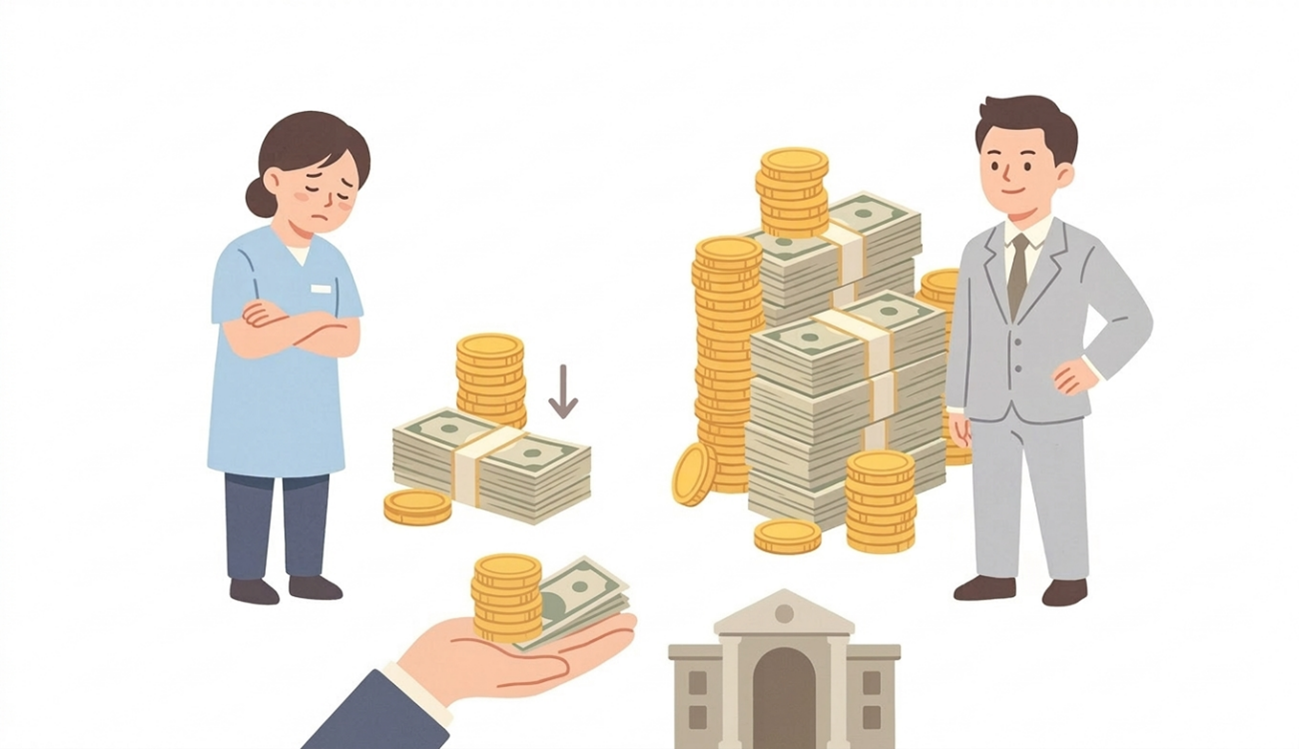
Efforts to improve wages for care workers have been facing persistent challenges. According to a survey conducted by an industry labor union, the monthly salary of care workers is approximately ¥70,000 lower than that of full-time employees in general occupations, and the gap continues to widen. The government has attempted to improve working conditions through measures such as the revision of long-term care reimbursement rates, which generally occurs every three years, as well as through supplementary budget subsidies. However, these initiatives have tended to produce only temporary effects and have not led to a fundamental resolution of the issue. In particular, small and medium-sized operators often lack the financial capacity to invest, and structural challenges remain, including delays in adopting technologies that could enhance productivity.
From NPMI’s perspective, breaking through these structural challenges requires both productivity improvements at the frontline and a fundamental scaling up of business operations. Providing existing care providers with substantial capital and specialized management expertise, thereby supporting industry consolidation, is critically important. By leveraging deep expertise in the healthcare and long-term care sectors, specialized funds can take a hands-on approach to driving business growth and promoting technology investment. Through these efforts, they can contribute to meaningful improvements in the treatment of care workers and help establish a sustainable community care system for the future.
References
- Nikkei, “Low Wages for Care Workers Remain Difficult to Improve,” February 20, 2026.
(https://www.nikkei.com/article/DGKKZO94536210Z10C26A2EP0000/)
【Key Term Explanation:Subsidy for Improving Treatment of Care Workers】
The Subsidy for Improving the Treatment of Care Workers is a public subsidy provided by the Japanese government to long-term care service providers with the aim of raising wages for employees working in the care sector. It was introduced as a policy response to the increasingly severe shortage of care workers. Under this system, when care providers implement wage increases for their employees, the government partially compensates the associated costs through financial subsidies.
The funds received through this program are required to be used for improving the treatment of care workers, such as raising base salaries or increasing various allowances. The objective is to enhance compensation levels and improve working conditions for personnel engaged in long-term care services.
In recent years, the government has repeatedly implemented similar subsidy schemes using supplementary budgets, separate from the regular revisions of long-term care reimbursement rates. While these measures can produce short-term improvements in wages, they are often temporary and do not fundamentally improve the underlying revenue structure of care service providers. As a result, their effectiveness in achieving sustainable wage growth remains limited.
To realize long-term and stable wage increases, it is necessary to strengthen the management foundations of care providers in parallel with such subsidy programs. This includes improving productivity through the introduction of ICT systems, streamlining operational processes, and expanding business scale. In this context, capital participation by specialized funds and long-term management support can play a significant role. By going beyond the framework of subsidies, such initiatives have the potential to drive structural reform across the long-term care industry and promote its sustainable, independent growth.
References
- Nikkei, “Low Wages for Care Workers Remain Difficult to Improve,” February 20, 2026.
(https://www.nikkei.com/article/DGKKZO94536210Z10C26A2EP0000/)