We—Nihon PMI Partners, Japan’s only sector-specialized healthcare buyout fund—support companies alongside healthcare experts, including MDs.
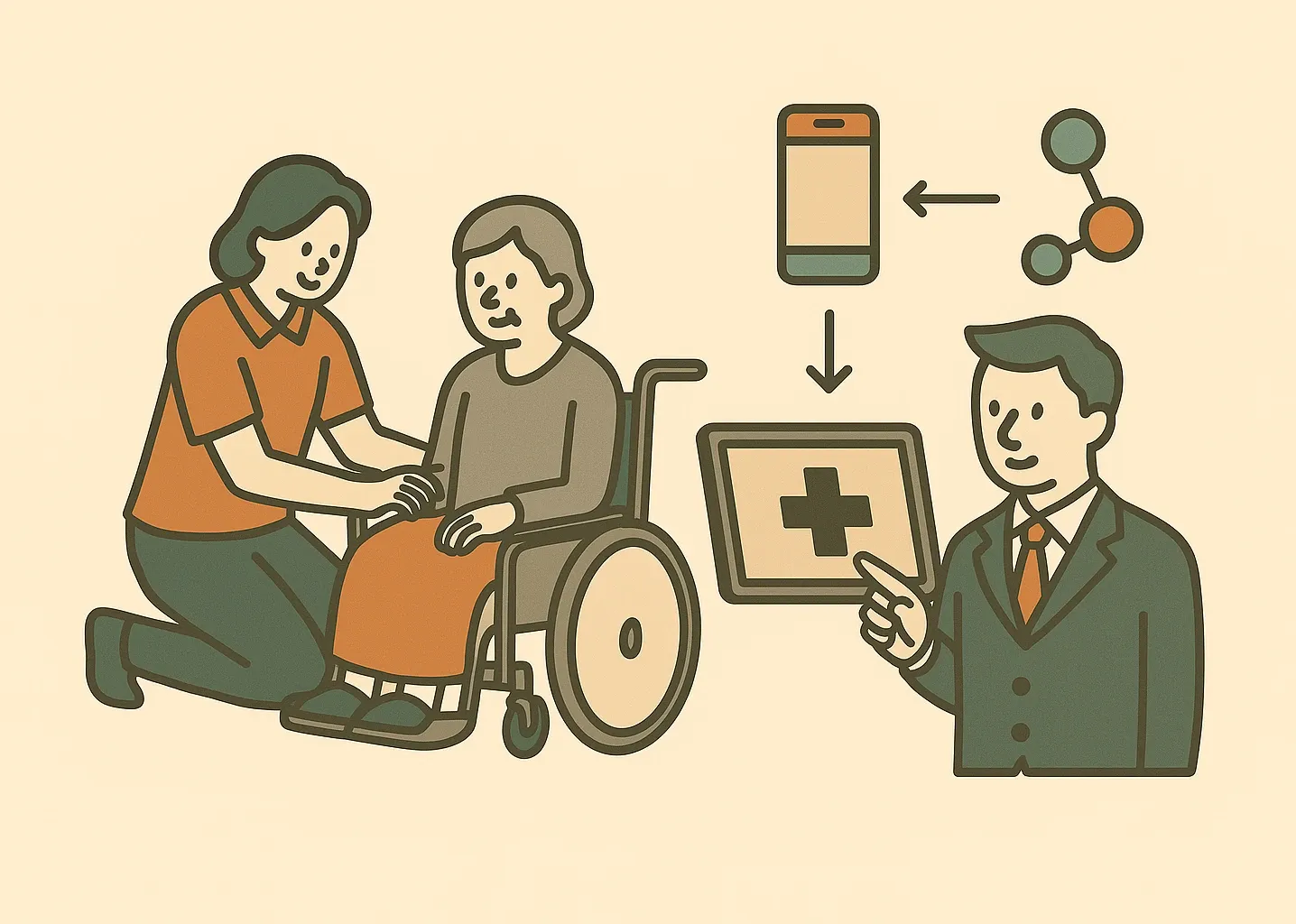
When people hear “healthcare fund,” they often think of investments in hospital chains or drug discovery biotech. However, Nihon PMI Partners takes a slightly different approach, focusing our investments on home-visiting nursing/care and medical ICT/DX. This time, we’d like to explain the background for this focus by examining Japan’s social systems and challenges.
Japanese hospital operators are generally limited to non-profit medical corporations, and operation by corporations is not permitted, making this a difficult sector for buyout funds to enter. Additionally, drug discovery biotech faces significant challenges due to prolonged clinical trials and approval processes coupled with high binary outcomes, making it difficult to design reproducible returns within a fund’s commitment period.
Conversely, home-visiting and medical ICT/DX benefit from ongoing policy support for regional healthcare and medical-care coordination. With significant potential for roll-ups and productivity gains, operational efficiencies and hiring improvements can be implemented in short cycles, directly impacting EBITDA. This makes it a sector well-suited for capital-efficient buyouts.
In Japan, the advancing aging and declining birthrate increase demand for medical and nursing care services while shrinking the working population. Particularly as the aging rate peaks around 2040, the sustainability of the healthcare delivery system is being questioned. Furthermore, disparities in healthcare quality and access between regions, along with a shortage of personnel to meet rising demand (Fig. 2), are core challenges nationwide.
Looking ahead to 2040, the government is promoting regional healthcare and medical-nursing care coordination, expanding subsidies and support measures to boost productivity among nursing care personnel and facilitate the acceptance of foreign workers.
Nihon PMI Partners invests in businesses aligned with these on-the-ground challenges and policy trends, pursuing both social impact and financial returns.
- Scaling support for businesses enabling home-visiting and community-based integrated care
- Productivity enhancement through ICT/DX adoption in healthcare and nursing settings
- Systematizing diverse workforce utilization (including foreign talent) and retention/development mechanisms