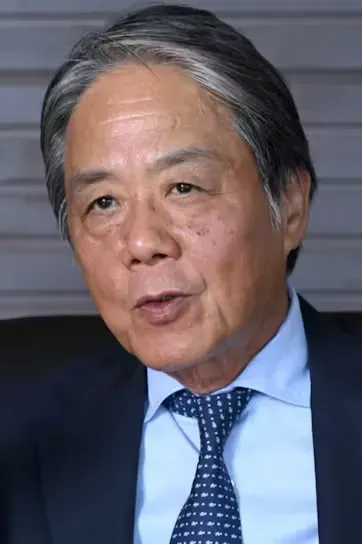
Featuring Kazuhiko Toyama, Takaomi Tomioka, Brian Heywood, and Wataru Tanaka
As Japanese companies increasingly engage in M&A activities both as acquirers and targets, with unsolicited takeover bids on the rise, 2025 is expected to continue this trend. Leading experts in business restructuring, investment funds, and academia share their views on what constitutes value-creating M&A.
Management Capability is Key to M&A SuccessKazuhiko Toyama, IGPI Group Chairman
“M&A success fundamentally depends on the acquirer’s organizational management capabilities,” asserts Toyama. “It requires rapidly understanding and transforming the target organization—a challenging task that’s beyond the reach of executives who struggle with their core operations.”
Synergies rarely materialize easily post-acquisition, he notes. While cost synergies are most achievable in overlapping administrative functions, Japanese companies often resist restructuring, making integration more challenging through operational consolidation alone.
Successful acquisitions typically involve dominant leaders like Nidec founder Shigenobu Nagamori, who can make decisive changes. Japanese organizations’ homogeneous nature often leads to rejection of external elements, making integration difficult. PE funds, being “culturally neutral,” may face less organizational resistance.
“However, PE funds’ limitation lies in their shorter time horizons, making them better at cost reduction than growth strategy implementation,” Toyama explains.
Building Trust is EssentialTakaomi Tomioka, Carlyle Japan Co-Head
Tomioka emphasizes post-merger integration (PMI) as the critical success factor in PE investments. “While deal sourcing and exits are crucial, given fund lifespans, PMI ultimately determines success,” he states.
He cites Carlyle’s investment in Sanyoseiyaku as a notable success, where international expansion enhanced profitability before a strategic sale to Towa Pharmaceutical. Another example is Solasto, where Carlyle supported expansion into elderly care through M&A, ultimately achieving a Prime Market relisting.
“The first six months post-investment are crucial,” Tomioka emphasizes. “Redefining mission, vision, and values while aligning with management and addressing employee concerns is essential for success.”
Market Revolution Mirrors 1980s U.S.Brian Heywood, CEO, Taiyo Pacific Partners
“Japan’s current landscape reminds me of 1980s America,” Heywood observes. “We’re seeing conglomerates divesting non-core businesses amid performance challenges, while hostile takeovers emerge—a transformative period.”
He emphasizes that companies must now “change or be changed.” Citing Seven & i Holdings as an example, he notes how the company, which once acquired the struggling U.S. 7-Eleven operations, now finds itself the target.
Heywood identifies several barriers to corporate transformation in Japan, including inefficient in-house production preferences, founder attachments, and board dynamics that impede swift decision-making. While hostile takeovers previously faced obstacles, the Ministry of Economy, Trade and Industry’s takeover guidelines have effectively granted “permission” for such activities.
“Japan offers the highest number of potential acquisition targets globally,” Heywood asserts. “Companies possess valuable technology, patents, and talent, yet trade at depressed valuations.”
On successful integration, Heywood emphasizes operational transparency. He cites Roland’s transformation, where granular SKU-level profitability analysis guided capital allocation decisions. However, he stresses balancing short-term profits with long-term growth investments in talent and strategy.
Value Creation Over Price MaximizationWataru Tanaka, Professor, University of Tokyo
Tanaka acknowledges the METI guidelines’ positive impact on M&A activity, citing Nidec and Dai-ichi Life Holdings’ unsolicited bids as evidence of shifting corporate strategies. However, he notes the guidelines’ deliberate ambiguity, achieved through stakeholder compromise.
Regarding the emphasis on “maximizing shareholder benefits,” Tanaka explains that while market checks are suggested, they’re not strictly mandated—recognizing potential conflicts between price maximization and enterprise value enhancement.
Comparing Japanese and U.S. approaches, Tanaka discusses Delaware’s Revlon duties: “The active duty to maximize price when selling and the passive duty not to obstruct higher offers. The passive approach better aligns with Japanese social norms.”
He highlights the fundamental difference in directors’ fiduciary duties between Japan and the U.S. “Japanese law establishes directors’ duty to the company, not directly to shareholders. Wholesale adoption of U.S. concepts may be inappropriate.”
Regarding the Seven & i Holdings situation, Tanaka raises concerns about the founding family’s LBO proposal: “If the proposed debt burden proves unsustainable, directors might breach their fiduciary duties by not rejecting it. Similarly, Couche-Tard might overvalue Seven & i due to limited understanding of Japan’s retail sector, potentially destroying value post-acquisition.”
Editorial Perspective: Board’s Strategic Imperative
A decade of corporate governance reform has established outside directors as standard practice in Japanese boardrooms. The challenge now lies in leveraging this external expertise to enhance corporate value, particularly in M&A scenarios.
Unsolicited takeover bids often present conflicts between shareholder and stakeholder interests. Maximizing sale price for shareholders might compromise stakeholder interests and post-merger operations. Boards must balance these competing interests through comprehensive analysis, drawing on diverse expertise in management, finance, and governance.
This responsibility extends equally to acquiring companies, where boards must ensure strategic fit and sustainable value creation beyond immediate financial returns. The evolving M&A landscape demands boards capable of navigating complex stakeholder dynamics while maintaining focus on long-term value creation.