Tokyo Shoko Research has recently released a report highlighting a significant increase in the establishment of new legal entities in Japan’s travel and hospitality industries during 2023. This growth is attributed to the robust recovery of both domestic tourism and inbound international travel.
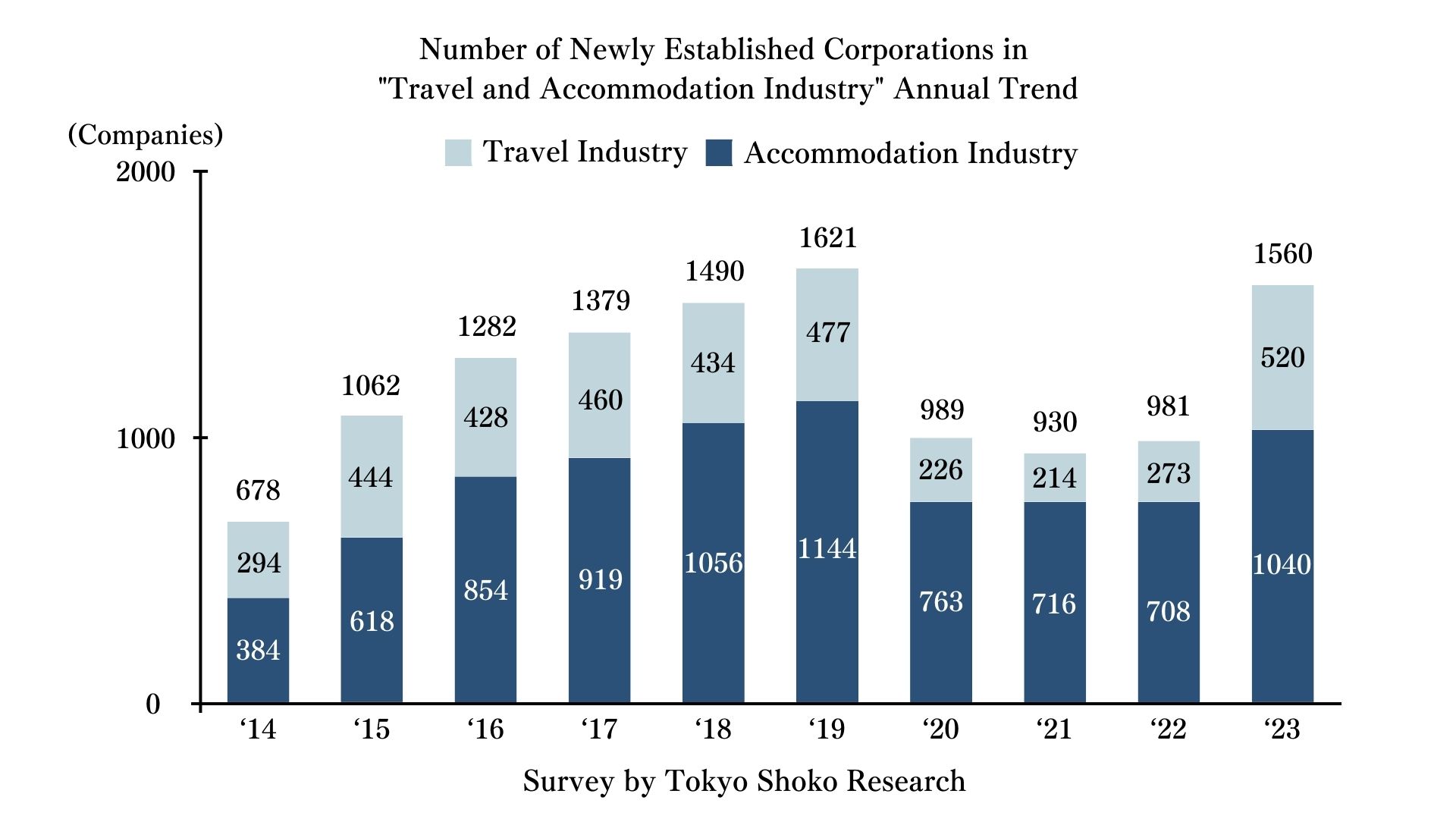
In 2023, the number of newly established companies in the travel and accommodation sectors reached 1,560, marking a 59% increase from the previous year. While this figure falls slightly short of the pre-pandemic level of 1,621 companies in 2019, it represents the highest number in four years and the second-highest in the past decade. This data was compiled by analyzing Tokyo Shoko Research’s extensive database of approximately 4 million companies.
The travel agency sector, in particular, saw remarkable growth, with 520 new companies established – nearly double the number from the previous year and surpassing the 2019 figure of 477. This marks the highest number of new travel agencies in the past decade. The growth was particularly pronounced in major urban areas and popular tourist destinations, with Tokyo (176 companies), Osaka (78), Hokkaido (30), and Okinawa (19) leading the way. However, the report also noted a widening regional disparity, as five prefectures – Yamagata, Tochigi, Wakayama, Tottori, and Yamaguchi – saw no new travel agency establishments.
The accommodation sector also experienced significant growth, with 1,040 new companies established, a 46.8% increase from the previous year. This marks the first time in four years that the number of new accommodation businesses has exceeded 1,000. Tokyo led with 296 new establishments, followed by Osaka (116), Hokkaido (55), Nagano (52), and Okinawa (49). Notably, new companies were established in all 47 prefectures, indicating a nationwide trend.
An interesting development is the increased focus on snow resort areas, particularly in Hokkaido and Nagano prefectures, which are popular among international tourists. Tokyo Shoko Research attributes this partly to the Japan Tourism Agency’s initiative since 2020 to support the development of internationally competitive snow resorts.
The report also noted a trend of companies registering their headquarters in major cities like Tokyo while operating accommodation facilities in regional areas. This strategy allows businesses to capitalize on the benefits of a metropolitan base while tapping into regional tourism markets.
For foreign investors, these trends indicate several key points:
- The Japanese tourism and hospitality sectors are showing strong signs of recovery and growth post-pandemic.
- There are opportunities not just in major cities but also in popular tourist destinations, especially in snow resort areas.
- The industry is adapting to changing travel patterns and preferences, including increased interest in regional tourism.
- While growth is widespread, there are still regional disparities, which could present both challenges and opportunities for targeted investments.
As Japan continues to welcome back international tourists and promote domestic travel, the travel and hospitality sectors are likely to remain dynamic and potentially lucrative areas for investment. However, as Tokyo Shoko Research points out, these new businesses will need to prove their ability to capture tourism demand effectively across various regions to succeed in an increasingly competitive market.